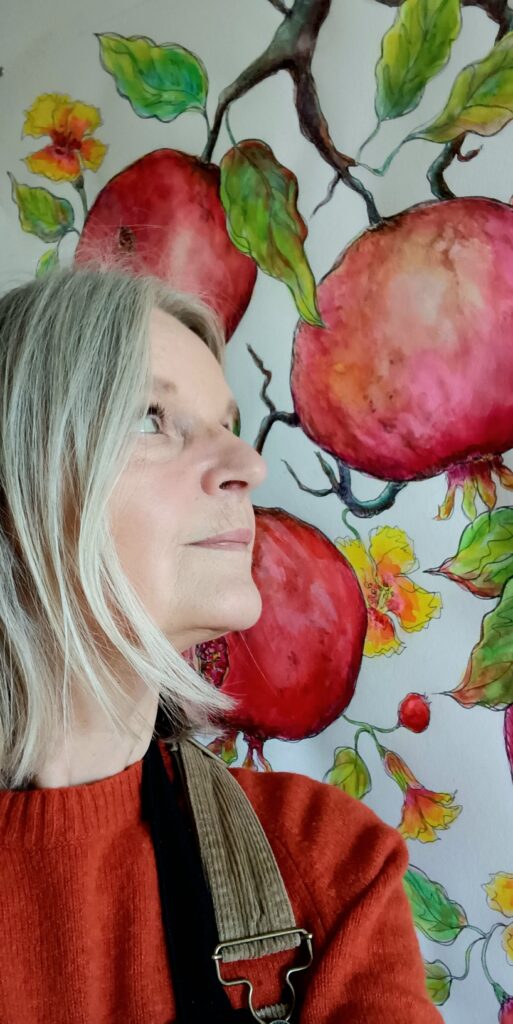
Hélène Dalloz-Bourguignon began her artistic training at a very young age. As art lovers, her parents organized exhibitions every summer at their estate in Burgundy, allowing her to meet artists such as Jean Messagier, René Roche, Michel Tourlière, and Ervin Patkaï… She also attended Pierre Belvès’s classes at the Ateliers des Arts Décoratifs, followed by workshops at the Place des Vosges. It was therefore only natural that she went on to study art history and archaeology at Paris Panthéon-Sorbonne University. During a summer internship, she restored the painted plasterwork of a Gallo-Roman villa in the Limousin region, an apprenticeship that opened up a new path for her.
At the Salon des Antiquaires et des Métiers d’Art in Fontainebleau, Hélène Dalloz-Bourguignon met François Poisson de Souzy and Yves Lapaix, picture restorers and founders of the Saint-Gervais workshops, where she started as a student, then worked as an assistant for four years.
She completed her training with an internship at the Vatican workshops. In 1982, she opened her own restoration workshop in the village of Saint-Paul in the Marais district. She works on 17th and 18th century paintings and polychrome sculptures, as well as modern and contemporary works. She works for both private and institutional clients, such as the Forney library, which asked her to restore cartoons for Beauvais tapestries.
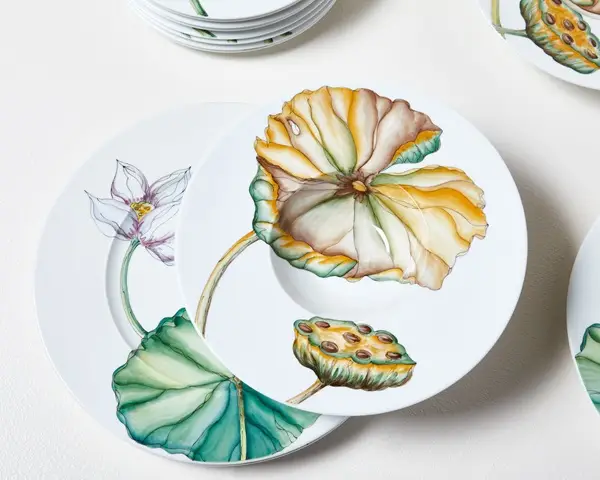
Gradually, Hélène Dalloz-Bourguignon broadened her field of investigation, taking on commissions from private individuals for decoration projects, designing upholstery fabrics and theater sets. At the same time, she worked on her own paintings, which she presented for the first time in 1997 and has since exhibited regularly (Palais ducal de Nevers, Avignon, Arles, Abu Dhabi…).
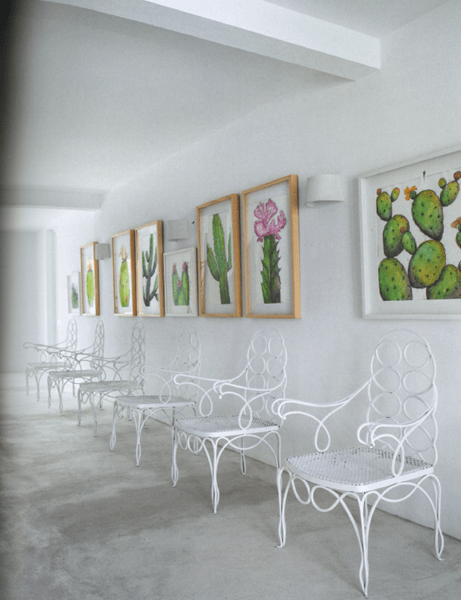
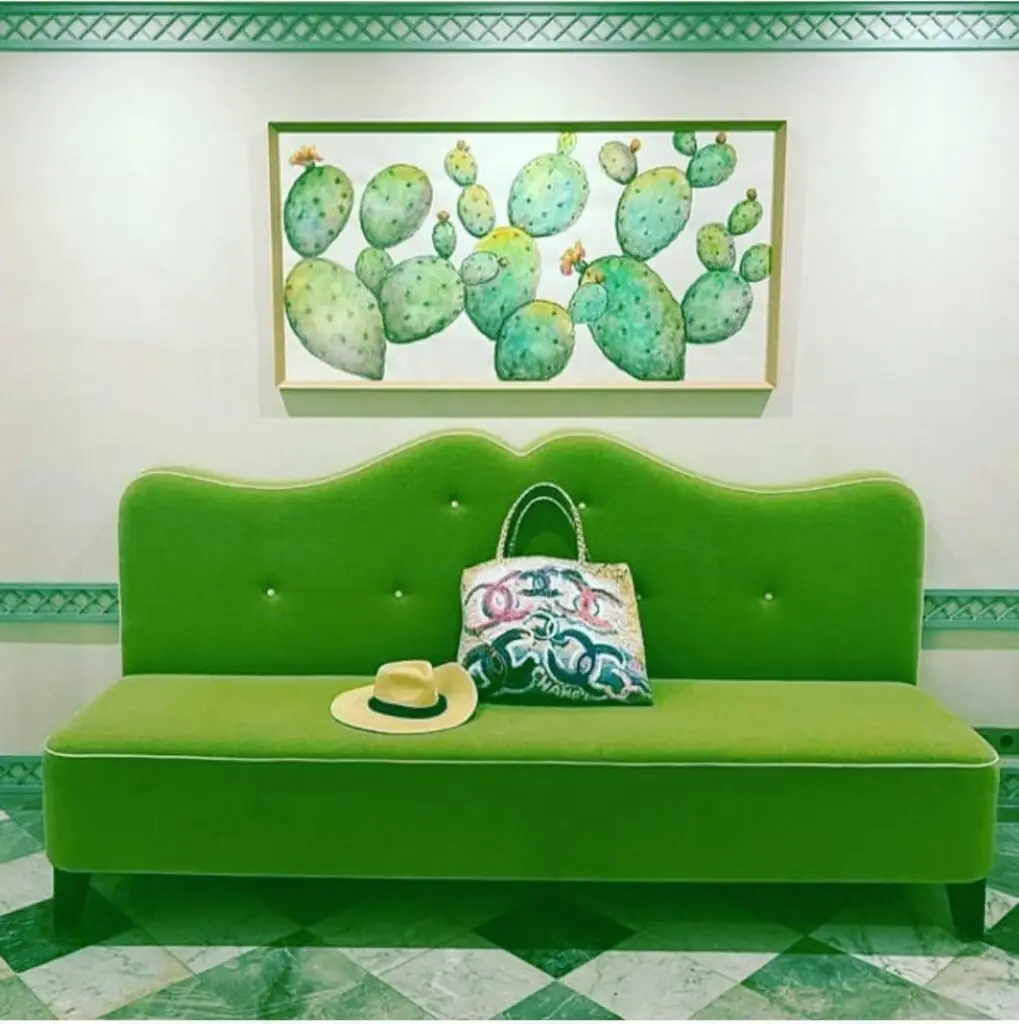
“I’ve always collected a harvest of flowers in my little notebooks, constantly discovering, in the randomness of their shapes and colors, a fantasy and strangeness that inspire me. Once back in the studio, playing with close-ups and framing, I create my imaginary garden.
I use several natural supports, depending on the chosen medium: raw linen canvas glued together for oils, Japanese paper made from mulberry plant fiber for charcoals and pastels or, as is the case today, Korean bamboo paper for watercolors highlighted with Indian ink.